
Any itchy, discolored patch of skin causes more than just irritation—it also causes confusion.
“What caused this rash?”
“How do I treat it?”
“Why won’t it go away?”
These are all questions you should ask a board-certified dermatologist in Richardson at McGuiness Dermatology & Plastic Surgery.
Not only can we accurately diagnose your skin rash, but we can also determine a treatment and maintenance plan for you. This plan is much more effective and simple than trying to take matters into your own hands. We explore why in this article.
Table of Contents
Education is a cornerstone of our practice. That’s why we write monthly blogs and articles that explain the importance of visiting a dermatologist for all of your skin concerns. In this article, we cover the following topics:
- What Is a Skin Rash?
- Why You Shouldn’t Self-Diagnose a Skin Rash
- Why You Should Trust a Dermatologist
Don’t feel like reading? That’s okay! You can go ahead and contact our offices to book your skin check!
What Is a Skin Rash?
A rash seems so simple at first: A discolored patch of skin that may cause an itching or burning sensation. Treatment may also seem simple: Apply a soothing ointment and try not to scratch at it (easier said than done).
It’s actually much more complicated than that.
There are many types of rashes. A dermatologist in Richardson may categorize them into the following.
Dermatitis (skin inflammation)
Dermatitis is a broad term for inflammation or irritation of the skin. Allergies, genetics, and environmental triggers can cause it. While it’s not contagious, anyone is at risk of developing this common skin rash. Types of dermatitis include:
- Eczema (Atopic Dermatitis) – A chronic condition that weakens your skin’s barrier causing it to become dry and itchy.
- Contact Dermatitis – A rash that develops when you come into contact with something you’re allergic to.
- Seborrheic Dermatitis – A type of dermatitis that causes scaly, flaky, and itchy patches on your face and scalp. An example of this is dandruff.
Infectious Rashes
An infectious rash is contagious. Instead of trying to clear symptoms yourself, visit a dermatologist in Richardson for proper diagnosis and treatment. Some examples of an infectious rash include:
- Ringworm – A fungal infection that appears as a round, ring-like circle with a slightly wavy border. You can have more than one at a time that even overlap.
- Athlete’s Foot – A fungal rash that comes with blistered or cracked skin and an odor. While most commonly appears on the foot, it can also spread to the groin or armpits.
- Molluscum Contagiosum – A viral rash that appears as small, firm bumps that may either be painless or itchy. They can appear on your face, neck, hands, arms, or armpits and are often acquired through sexual contact.
Autoimmune Rashes
Autoimmune rashes happen when your immune system attacks your body’s cells, tissues, and organs rather than defending them. There is no cure for autoimmune rashes, but our team can provide ongoing treatment to help manage and minimize symptoms. Some examples of autoimmune rashes include:
- Psoriasis – A skin condition that causes areas of skin to become thick, discolored, and covered with scales (plaques). Most patients who visit a psoriasis doctor with this condition also note discomfort and itchiness.
- Lupus – Lupus causes inflammation throughout your body. A dermatologist can identify it by symptoms like hair loss, a butterfly-shaped rash across your face, or thick, scaly patches that also cause burning or itching.
- Sjögren’s Syndrome– When your immune system damages moisture-producing glands in your body, it causes Sjögren’s Syndrome. This results in dry skin that can lead to skin rashes among many other uncomfortable symptoms.
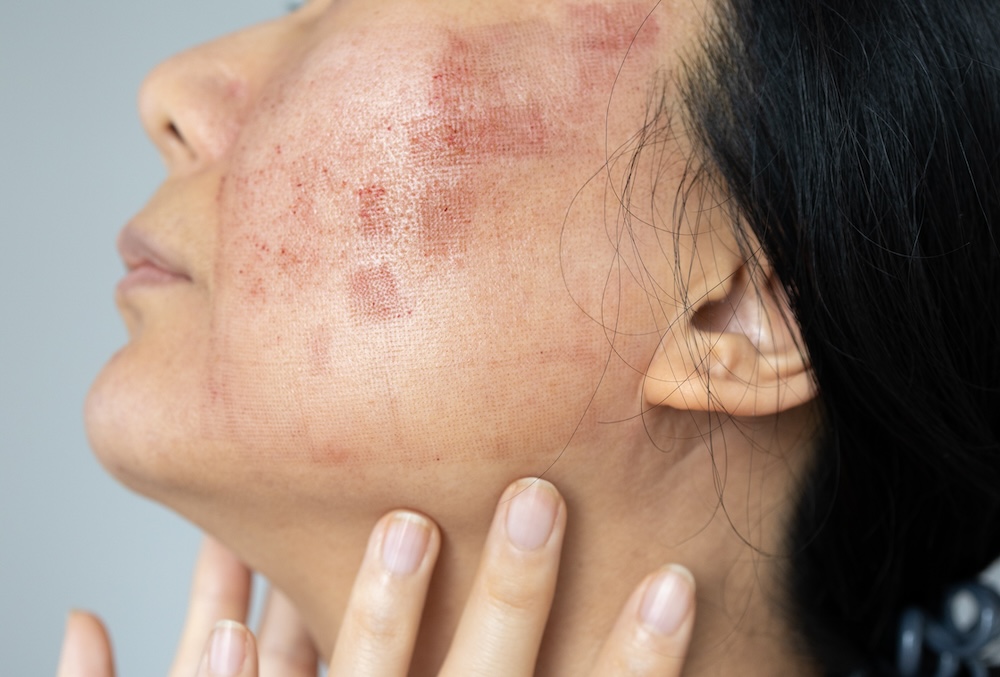
When it comes to autoimmune diseases, we highly recommend seeing a dermatologist if you—or your child—start experiencing rash-like symptoms. These conditions can manifest in surprising ways, sometimes mimicking common skin irritations but with far more complex implications for overall health. Early detection and intervention, guided by a specialist, are crucial.
Why You Shouldn’t Self-Diagnose a Skin Rash
A skin rash is fairly common, and most aren’t even life-threatening. But that doesn’t mean that they can’t be a sign of something more serious.
Before you head to the search engines (or worse—ChatGPT) to identify your rash and come up with a proper treatment plan, consider visiting a board-certified dermatologist in Richardson instead. Our experts understand the following considerations when diagnosing and treating a rash.
Rashes Can Have Similar Appearances
Many types of rashes can be mistaken for one another. Take psoriasis and eczema, for example. Both conditions cause your skin to appear pink or red in lighter skin tones or dark brown, gray, or purple in darker skin tones. A proper diagnosis lies in whether the rash has a well-defined border (psoriasis) or an ill-defined border (eczema).
You may see a circular rash appear on your body and immediately jump to the conclusion that you have ringworm. However, it could also be a range of other conditions. Lyme disease, eczema, psoriasis, and lupus are other common types of rashes that can be mistaken for one another.
Rashes Have Different Causes
A board-certified dermatologist in Richardson understands that each specific type of rash has a different cause. From fungus to viral infections to allergies to environmental factors, determining the cause of your rash can prove to be quite complicated. At McGuiness, we don’t always diagnose a rash based on appearance alone. After all, looks can be deceiving.
Instead, we base the diagnosis on your symptoms, medical history, and the following tests during your skin consultation:
- Biopsy: We take a small sample of your skin to test it for bacteria or viruses.
- Allergy Test: We expose your skin to small amounts of substances that could cause an allergic reaction.
- ‘Blood Tests: To find the cause of your skin rash, we test your blood for antibodies related to potential autoimmune diseases.
Different Rashes Require Specific Treatments
Some rashes may go away on their own, while others require specific anti-inflammatory creams, like hydrocortisone, or topical or oral steroids to ease symptoms. For chronic skin rashes like eczema and psoriasis, your dermatologist in Richardson can teach lifestyle adjustments to manage these conditions.
Why You Should Trust a Dermatologist
At McGuiness, we have a knowledgeable staff of board-certified dermatologists and physicians who can accurately diagnose and properly treat over 3,000 diseases affecting your hair, skin, and nails. Many of these rashes can appear anywhere on your body, including your scalp, elbows, nails, and face.

Not only do we understand the physical discomfort a rash might cause you, but also the mental tolls these can take on you. Skin conditions can interfere with sleep, concentration, and your self-image.
Here are more reasons you should trust our staff at McGuiness Dermatology with your skin rash.
A Rash Can Require Medical Attention
If not properly treated, a skin rash can lead to an infection. This is because a rash weakens your skin’s barrier, making it easier for germs to enter your body. Some common signs that you should seek immediate medical attention include:
- Fever or illness
- A rapidly spreading rash
- Swelling
- An unpleasant smell
Instead of waiting and increasing the risk of these symptoms, we recommend scheduling a quick consultation with our team. Most skin checks only take 10 minutes, which makes fitting a quick visit into your busy schedule much easier.
We offer our dermatology services at 6 different locations around the Dallas-Fortworth metroplex, including:
- Plano
- Frisco
- Murphy
- Richardson
- Flower Mound
- Prosper
Proper Treatment Is Crucial for a Skin Rash
As we stated before, specific rashes require specific treatments. It’s difficult enough already to identify the type of rash that you have, but finding the right products and management plan can be even harder. In some cases, your methods may even worsen the rash and its symptoms.
What you may not realize is that some products that you’re already putting on your skin could also be contributing to your rash. It takes time for a rash to develop, so it’s hard to pinpoint which products might be the culprit for your rash.
Or in other cases, like autoimmune diseases, you may not even realize it’s an internal issue that requires lifestyle management in addition to using the right products.
Not only are we providing you with the proper care that you deserve for your skin rash, but we are also saving you time and money. When you visit a board-certified dermatologist, you free yourself of the trial-and-error of finding the right products to soothe your skin.
Ongoing Care
A rash can go away, it can return, and in some cases, it can linger. A dermatologist in Richardson is here to help you manage symptoms and find relief. You can rely on our team for product recommendations and lifestyle management. For patients with an autoimmune disease, this includes identifying triggers (weather, food, and even stress can contribute to your rash).
As a reminder, we provide dermatological care beyond treating a rash at our skin treatment clinic. We’re here to help with everything from skin cancer to acne to hair loss.

Schedule a Consultation
The fastest way to find relief from a skin rash is to trust a dermatologist in Richardson. Fortunately, we have plenty on our staff who you can easily access if you’re in or near Dallas.
Try our treatment planning tool or request a consultation.