Understanding Your Eczema
Eczema is more than dry skin. Identifying the type of eczema you have and the factors that trigger flare-ups helps us create an eczema treatment plan that protects your skin and manages symptoms over time.
What Causes Eczema?
Eczema develops when your skin barrier cannot effectively retain moisture or protect itself against irritants. Genetics, your immune system, and environmental factors can all contribute to flare-ups.
Common triggers include:
- Dry weather
- Heat
- Stress
- Fragrances
- Harsh soaps
- Skincare products
- Fabrics
- Allergens
Because every patient is different, identifying individuals’ triggers is an important part of long-term care.
Types of Eczema
“Eczema” refers to several types of dermatitis, each with different causes and characteristics. During your appointment, your dermatologist will determine which type is affecting your skin, such as:
- Atopic dermatitis
- Contact dermatitis (allergic or irritant)
- Dyshidrotic eczema
- Nummular eczema
- Seborrheic dermatitis
- Stasis dermatitis
Identifying Your Triggers
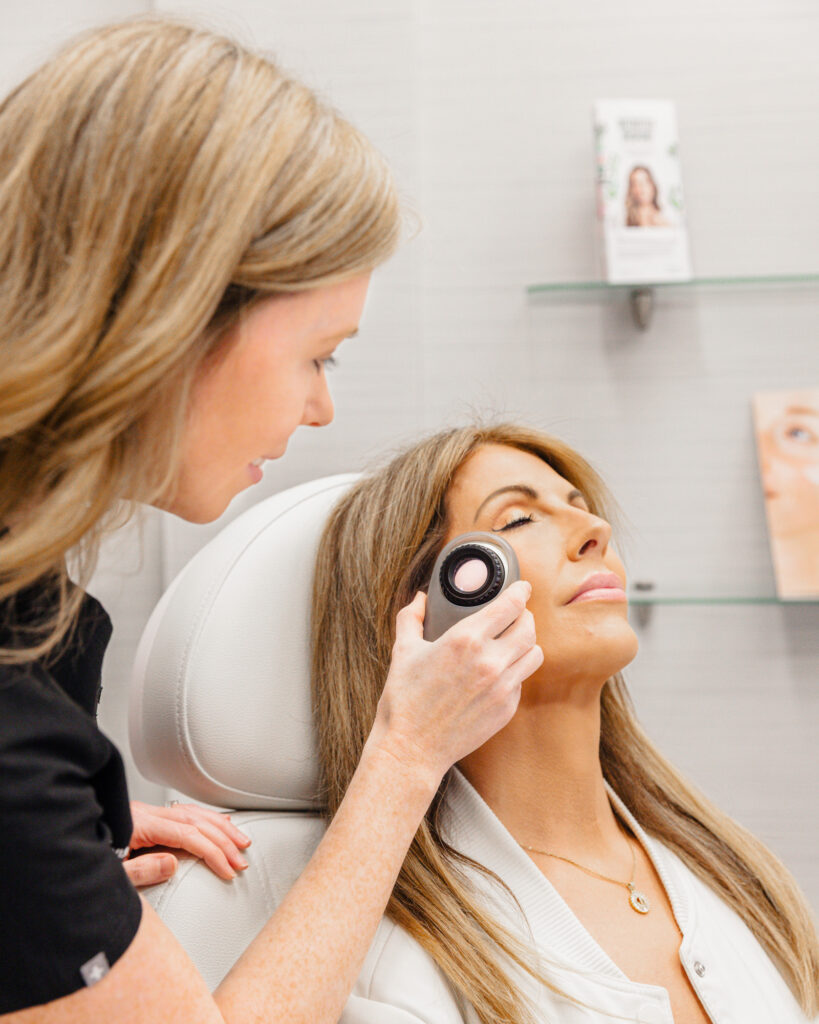
Your dermatologist will examine your skin, review your medical history, and ask when your symptoms began, where they occur, and what seems to trigger flare-ups. In some cases, we may recommend patch testing to identify contact allergens or a skin biopsy to rule out other conditions that can resemble eczema.
An accurate diagnosis helps us recommend the most effective treatment.
Building Your Treatment Plan
Every eczema treatment plan is tailored to the patient’s symptoms, triggers, and the severity of their condition. Treatment often begins with gentle skincare recommendations, fragrance-free moisturizers, and prescription topical medications to reduce inflammation.
Depending on your needs, your dermatologist may also recommend oral medications, biologic injections, phototherapy, or antihistamines.
Because eczema is a chronic condition, we continue to monitor your skin and adjust your treatment plan as your symptoms or triggers change.