A More Complex Operation
A previous rhinoplasty permanently changes the nose’s anatomy. Cartilage may have been removed or repositioned, normal tissue planes can contain scar tissue, and the skin may respond differently during another operation. These factors make revision surgery less predictable than your first rhinoplasty.
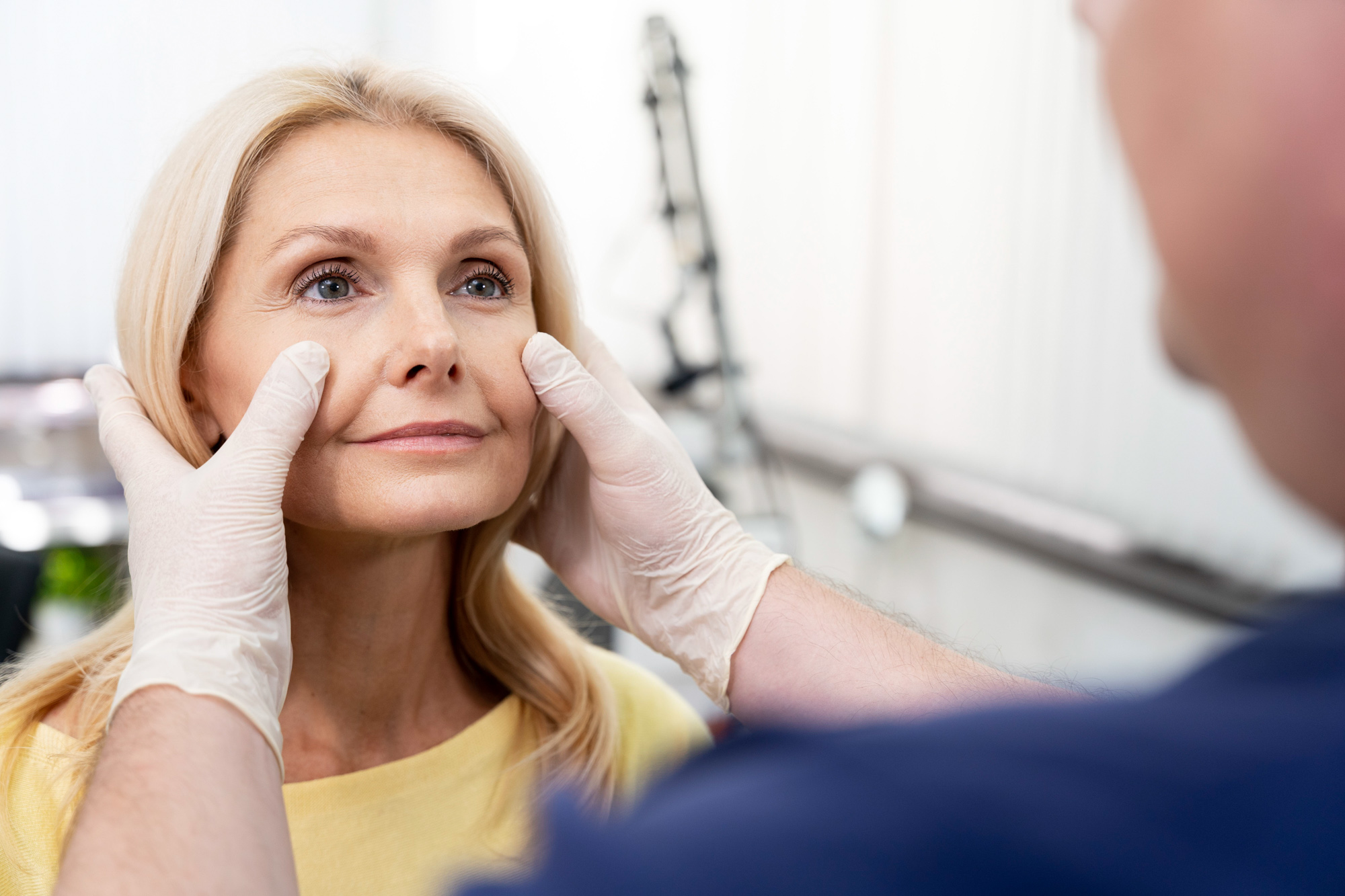
Patients considering revision rhinoplasty in Plano meet with Dr. Sheen for a detailed functional and aesthetic assessment. As a fellowship-trained facial plastic surgeon, he evaluates the nose in relation to the chin, lips, cheeks, and overall facial structure and profile.
Who May Benefit?
Revision surgery is appropriate for those with persistent asymmetry, an unsupported nasal tip, bridge irregularities, visible pinching, excessive narrowing, or difficulty breathing after a previous procedure. Some patients seek subtle refinement, while others require significant nasal reconstruction.
Candidates should be healthy enough for surgery, avoid nicotine products, and have realistic expectations. Revision surgery can create meaningful improvement, but it cannot always produce perfect symmetry or completely erase the effects of prior procedures.
How Revision Rhinoplasty Works
Dr. Sheen selects an open or closed approach based on the amount of access and reconstruction required. Through carefully planned incisions, he can release restrictive scar tissue, reshape remaining cartilage, and improve nasal alignment.
Additional cartilage might be necessary when the septum no longer provides enough grafting material. Depending on your anatomy, cartilage may be obtained from the ear or rib. These grafts can reinforce the bridge, support the nasal tip, or improve the structures responsible for airflow.
During the procedure, Dr. Sheen prioritizes durable support, functional breathing, and a contour that complements your other features.
Recovery and Results
Swelling, bruising, congestion, tightness, and temporary numbness are expected after surgery. A splint may remain in place during early healing. Many patients return to desk work or social activities after two to three weeks, although visible swelling often persists longer.
Revised noses often takes longer to refine because of scar tissue and previous surgical changes. While improvement becomes noticeable as early swelling decreases, the final contour may take a year or longer to develop.